
By House of Investments · Updated April 2026 · 10 min read
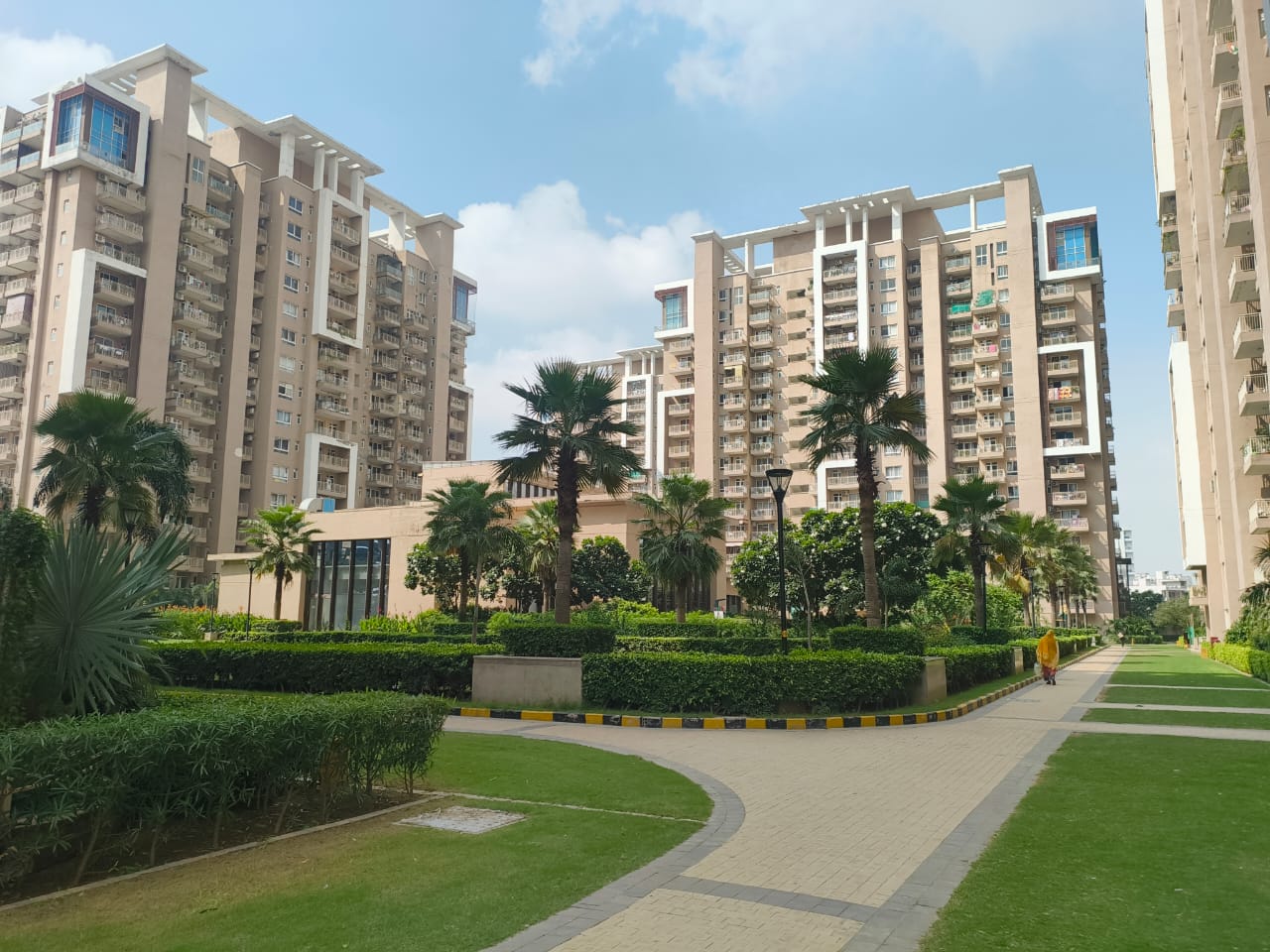
For Non-Resident Indians evaluating real estate in the National Capital Region, Emaar Palm Gardens in Sector 83, Gurugram occupies a rare position: a fully delivered, Grade-A township by a globally recognised developer, available on the secondary market at prices that still offer meaningful upside. No construction risk. No GST. No waiting.
But buying property in India from abroad involves a set of legal, financial, and logistical layers that can make an otherwise straightforward transaction feel complicated. This guide walks you through every step — from FEMA eligibility to repatriating rental income — written specifically for NRI buyers considering Emaar Palm Gardens.
Can NRIs Buy Property in India? The FEMA Framework
Yes. Non-Resident Indians are permitted to purchase residential and commercial property in India under the Foreign Exchange Management Act (FEMA), 1999, administered by the Reserve Bank of India. For NRIs, this is a general permission — meaning no prior RBI approval is required for most residential purchases.
Who qualifies as an NRI for property purchase purposes?
Under FEMA, an NRI is an Indian citizen residing outside India. This includes:
- Indian passport holders living and working abroad
- Indian citizens on long-term visas (work, student, dependent) in foreign countries
- Persons of Indian Origin (PIOs) holding foreign citizenship (subject to slightly different rules — see below)
What can NRIs buy?
- Residential properties — flats, houses, villas — without restriction on number
- Commercial properties
- Agricultural land, farmhouses, and plantation properties are not permitted for NRI purchase without special RBI approval
Emaar Palm Gardens is a residential freehold property — it falls squarely within permitted NRI purchase categories.
What about Overseas Citizens of India (OCI) cardholders?
OCI cardholders are treated on par with NRIs for the purpose of property purchase in India, with the same permissions and restrictions as above. If you hold an OCI card, you can purchase Emaar Palm Gardens on the same terms as an NRI.
Payment Rules Under FEMA — How to Fund Your Purchase
This is where NRI transactions most often go wrong. FEMA specifies which accounts and fund sources are permissible for property purchase. Using the wrong account can create compliance problems during resale or repatriation.
Permitted payment sources:
1. NRE Account (Non-Resident External Account) Funds in an NRE account are freely repatriable — they can be sent back abroad without restriction. Paying from an NRE account is the cleanest option for NRIs because it preserves your right to repatriate the sale proceeds later.
2. NRO Account (Non-Resident Ordinary Account) NRO accounts hold rupee income earned in India — rent, dividends, pensions. You can pay from an NRO account, but repatriation is subject to a cap of USD 1 million per financial year (after payment of applicable taxes) and requires Form 15CA/15CB certification from a chartered accountant.
3. Foreign Currency Non-Resident (FCNR) Account Funds converted from FCNR deposits can also be used for property purchase, subject to the same repatriation conditions as NRE funds.
What is not permitted:
- Direct inward remittance in foreign currency to pay a seller
- Payment through traveller’s cheques or foreign currency cash
- Payment by a third party (e.g., a relative’s Indian account) without documented justification
Practical guidance: Most NRI buyers of Emaar Palm Gardens route payments through their NRE account via NEFT/RTGS to the seller or their lawyer’s escrow. Set up your NRE account with a bank that has an international wire transfer agreement with your country of residence — HDFC, ICICI, Axis, and SBI all have robust international NRE infrastructure.
Home Loans for NRIs — Are You Eligible?
Yes. Most major Indian banks and housing finance companies offer NRI home loans for resale property purchases. Since Emaar Palm Gardens is a ready-to-move freehold property with a clear title history, it is eligible for home loan funding from virtually all lenders.
Typical NRI home loan terms (2026):
| Parameter | Typical Range |
|---|---|
| Loan-to-Value (LTV) | Up to 75–80% of registered value |
| Interest rate | 8.5%–9.5% per annum (floating) |
| Maximum tenure | 20–25 years |
| Processing fee | 0.25%–1% of loan amount |
| Repayment account | NRE or NRO account |
Documents typically required:
- Valid Indian passport and visa copy
- Overseas address proof (utility bill, bank statement)
- Last 3–6 months’ salary slips or employment contract
- Last 2 years’ foreign income tax returns (or equivalent)
- Last 6 months’ NRE/NRO bank statements
- Property documents: Sale deed, building plan approval, RERA certificate
Note that lenders typically require a Power of Attorney (PoA) from the NRI buyer authorising a resident Indian (a family member or lawyer) to execute documents in India on their behalf. This is standard practice and does not affect ownership rights.
The Buying Process — Step by Step
Step 1: Shortlist and site visit Most NRI buyers combine a site visit with a home trip to India. House of Investments can arrange a private walkthrough of available resale units in Emaar Palm Gardens, coordinated around your travel dates. Virtual tours are also available via video call.
Step 2: Token amount and letter of intent Once a unit is agreed upon, a token amount (typically ₹2–5 lakh) is paid to the seller to take the property off the market. This is refundable if the deal does not proceed due to a title issue but typically non-refundable if the buyer withdraws.
Step 3: Legal due diligence Engage a Gurgaon-based property lawyer to verify: the original title deed, encumbrance certificate (no existing loans on the property), building completion certificate, RERA registration (HRERA), and society NOC. For Emaar Palm Gardens, the RERA certificate is available on the Haryana RERA portal.
Step 4: Sale agreement A sale agreement is signed between buyer and seller, typically with 10–20% of the purchase price paid at this stage.
Step 5: Stamp duty and registration In Haryana, stamp duty for property registration is currently 5% for men and 3% for women on the circle rate or sale price (whichever is higher), plus a 1% registration fee. For a ₹2.5 Cr property registered in a woman’s name, stamp duty amounts to approximately ₹7.5 lakh — a significant saving worth structuring for.
Step 6: Sale deed registration The final sale deed is executed at the Sub-Registrar’s office in Gurgaon. As an NRI, you can be present in person or authorise a PoA holder to register on your behalf. Original documents are returned to the buyer.
Step 7: Society transfer After registration, apply for society membership transfer to your name with the Emaar Palm Gardens Residents’ Welfare Association. This grants you access to amenities, club membership, and maintenance billing in your name.
Taxes on NRI Property Transactions
Tax Deducted at Source (TDS) — the most important point for NRI buyers
When an NRI sells property, the buyer is legally required to deduct TDS before paying the seller. This is different from resident Indian transactions where TDS is only 1%. For NRI sellers:
- TDS rate: 20% of sale value if held for more than 2 years (long-term capital gains)
- TDS rate: 30% of sale value if held for less than 2 years (short-term capital gains)
If you are buying from an NRI seller, factor this into your payment flow — your lawyer and CA will handle the TDS deduction and deposit to the Income Tax department. The seller then claims credit for this TDS when filing their Indian tax return.
If you are the NRI buyer purchasing from a resident Indian seller, TDS is only 1% — far simpler.
Capital Gains Tax on future sale
When you eventually sell as an NRI:
- Long-term capital gains (held 2+ years) are taxed at 12.5% without indexation (post-Budget 2024 rules)
- Short-term capital gains are taxed at your applicable slab rate
NRIs can claim capital gains exemption under Section 54 by reinvesting proceeds into another residential property in India within specified timeframes, or under Section 54EC by investing in designated bonds.
Rental Income: How to Receive and Repatriate
Rental income from Indian property is taxable in India for NRIs, but the tax position is often manageable with standard deductions.
Taxation of rental income:
- Gross rental income is added to your Indian taxable income
- A standard deduction of 30% of net annual value is allowed for repairs/maintenance
- Municipal taxes paid are deductible
- Home loan interest is fully deductible if the property is let out
- TDS at 31.2% is deducted by the tenant if monthly rent exceeds ₹50,000; you reclaim excess via your Indian tax return
Repatriation of rental income:
Net rental income (after tax) can be repatriated abroad from your NRO account, subject to the USD 1 million per year cap. Form 15CA/15CB from a CA is required for each remittance. Most NRI landlords engage a CA on an annual retainer to manage this — typical cost ₹15,000–₹30,000 per year for basic compliance.
Expected net rental yield after Indian tax:
For a 3 BHK at ₹2.5 Cr generating ₹38,000/month (₹4.56 lakh/year), post-tax yield after standard deduction and 30% tax amounts to approximately 2.5%–3.2% net — still ahead of many offshore fixed-income products on a risk-adjusted basis.
Property Management — Who Looks After Your Flat?
The most common reason NRIs hesitate to buy Indian property is not legal complexity — it is the practical question of who manages the asset day to day while they are abroad.
Options for NRI landlords at Emaar Palm Gardens:
1. Dedicated property management firms Several Gurgaon-based property management companies offer end-to-end NRI services: tenant sourcing, rent collection, maintenance coordination, utility payments, and monthly reporting. Fees typically range from 8–12% of monthly rent.
2. Society facilities management Emaar Palm Gardens has an active RWA (Residents’ Welfare Association) with professional facilities management. While the RWA does not manage individual flat rentals, it handles common area maintenance, security, and utilities — significantly reducing your direct management burden.
3. House of Investments managed letting We offer a letting and oversight service for NRI owners of Emaar Palm Gardens units: tenant screening, lease execution, quarterly inspections, and maintenance coordination. Contact us at contact@hoione.com for current terms.
Why Emaar Palm Gardens Specifically for NRIs?
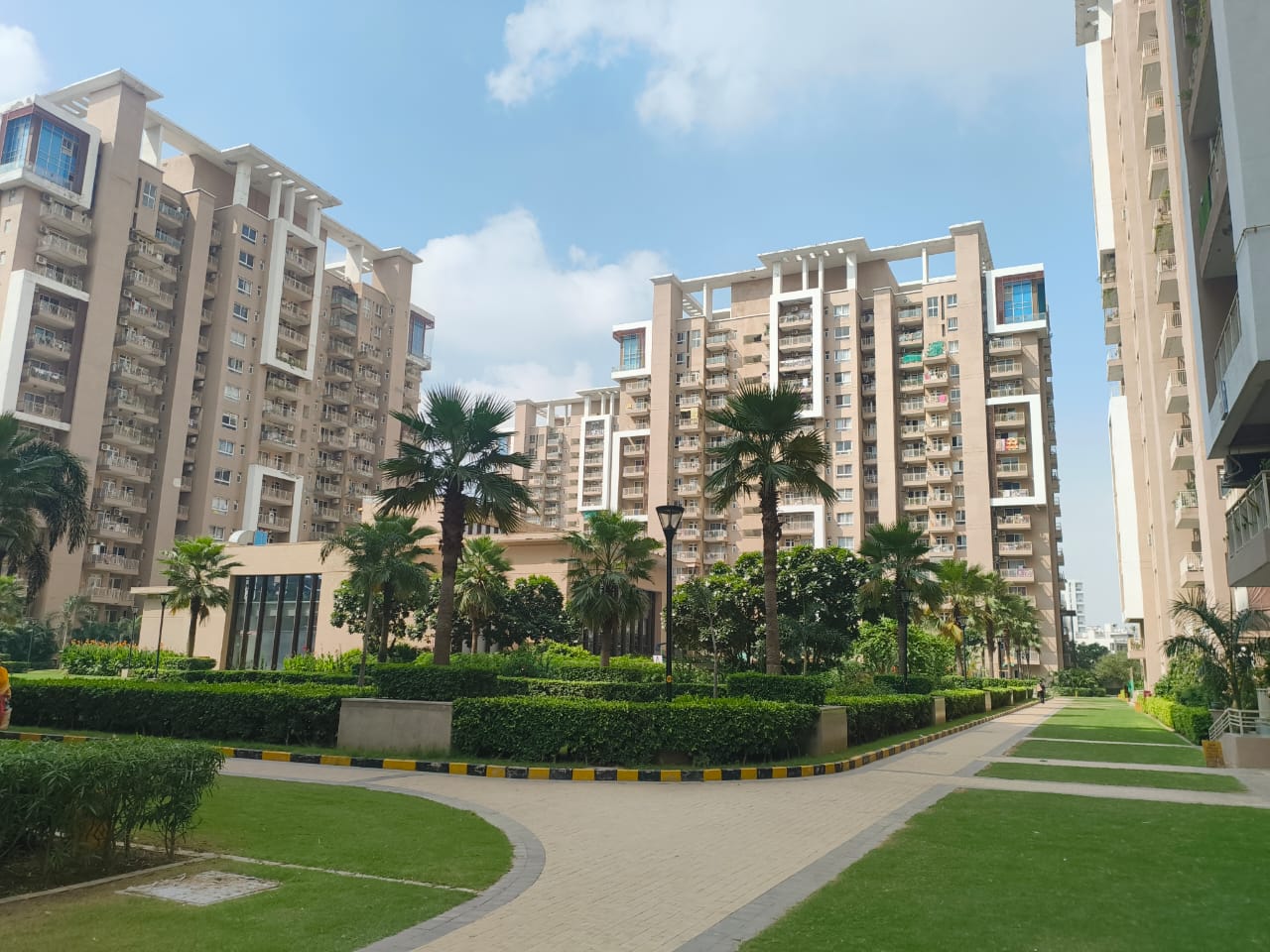
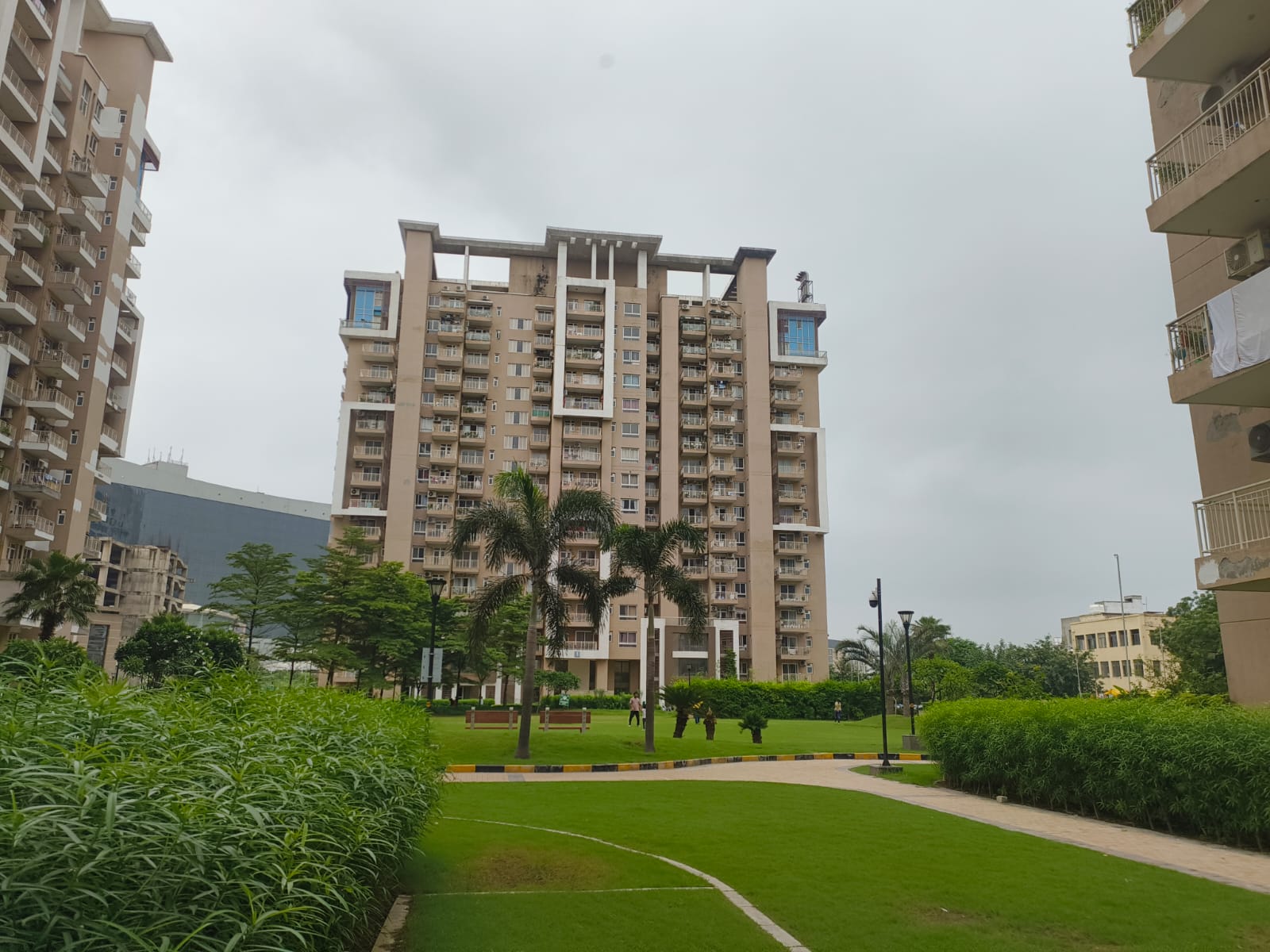
Among the ready-to-move Grade-A properties in Gurgaon, Emaar Palm Gardens has several characteristics that make it particularly well-suited to NRI ownership:
- Emaar India brand: Internationally recognised developer with a reputation for consistent construction quality, relevant to NRI buyers familiar with Emaar’s global portfolio (UAE, Egypt, Turkey)
- Freehold title: Full ownership — no leasehold complications
- Ready possession since 2018: The building is 7+ years old, meaning structural risks are well past their peak and any latent defects have already surfaced and been resolved
- Active RWA: A functioning residents’ association manages common areas, security, and maintenance — critical for owners who are not present
- RERA registered: Transparent title history accessible on the Haryana RERA portal
- NRI-friendly location: Sector 83’s established expat and NRI community means professional property management infrastructure exists and is well-tested
Frequently Asked Questions — NRI Buyers
Can I buy Emaar Palm Gardens without visiting India? Yes. With a registered Power of Attorney and video-verified KYC, the entire transaction can be executed remotely. We recommend at least one virtual walkthrough and an independent legal review of documents before execution.
Do I need RBI permission to buy? No. Residential property purchase by NRIs/OCI cardholders is a general permission under FEMA — no prior RBI approval is required.
Can I take a home loan in India as an NRI? Yes. Most major banks offer NRI home loans against Emaar Palm Gardens resale units. See the loan terms table above.
How long does the purchase process take? For a cash purchase with PoA already in place: 3–6 weeks from token to registration. For a loan-funded purchase: 6–10 weeks, depending on bank processing time.
Can I sell the property later and take the money back abroad? Yes, with conditions. Sale proceeds funded from an NRE account can be fully repatriated. Proceeds from NRO-funded purchases are subject to the USD 1 million per year repatriation cap after tax.
Speak to Our NRI Team
House of Investments handles NRI transactions in Emaar Palm Gardens on a regular basis. We coordinate with legal and CA partners to make the process straightforward from abroad — from first enquiry to key handover.
📞 Call / WhatsApp: +91 9958445582 📧 contact@hoione.com 🌐 emaarpalmgardens.com
We are available on WhatsApp for NRI clients across UAE, UK, USA, Canada, Australia, and Singapore time zones.
Disclaimer: This guide is for general informational purposes only and does not constitute legal or financial advice. FEMA regulations, tax rates, and stamp duty percentages are subject to change. Please consult a qualified CA and property lawyer before proceeding with any transaction. This is not the official website of Emaar India. House of Investments is an independent real estate advisory firm.
Leave a Reply